Home » Natural Grass vs Artificial Turf: Pros & Cons
Get one of our team members to give you a call to discuss your project!
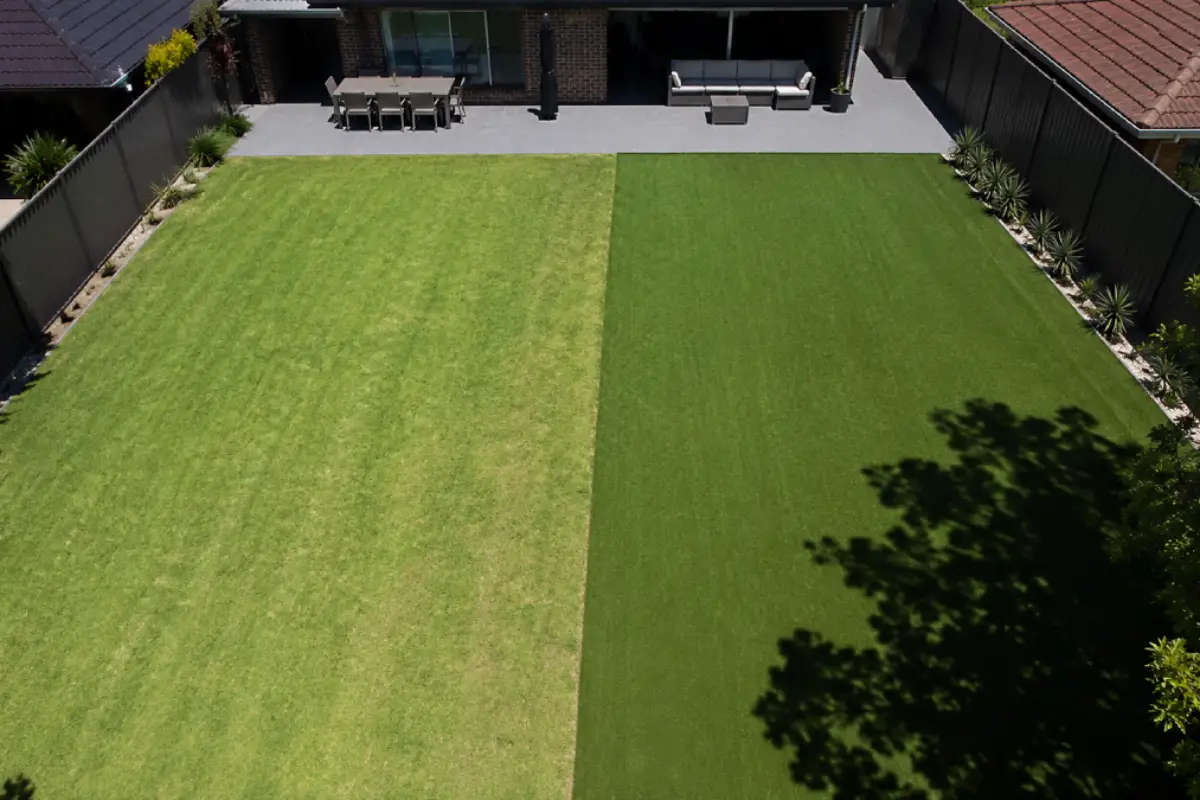
Short answer: Natural grass wins on any Sydney block with real sun. It costs about a third as much to install, stays near air temperature, and never needs replacing. Artificial turf wins in deep shade, on rooftops, and in courtyards too small to mow. The deciding factor is heat: synthetic surfaces in western Sydney have hit 75°C on a day when the air peaked at 28.2°C.
We get the same call every January. Someone’s kids have stopped going outside, nobody can work out why, and the yard looks perfect in photos.
Then they mention they put in fake grass two summers ago.
We sell grass for a living, so treat what follows accordingly. We are also about to spend a section telling you when not to buy it from us, because there are yards where a real lawn will not survive and we would rather say so up front.
Here is what the Australian research actually measured, what each surface costs over ten years, and how to tell in about five minutes which one your yard wants.
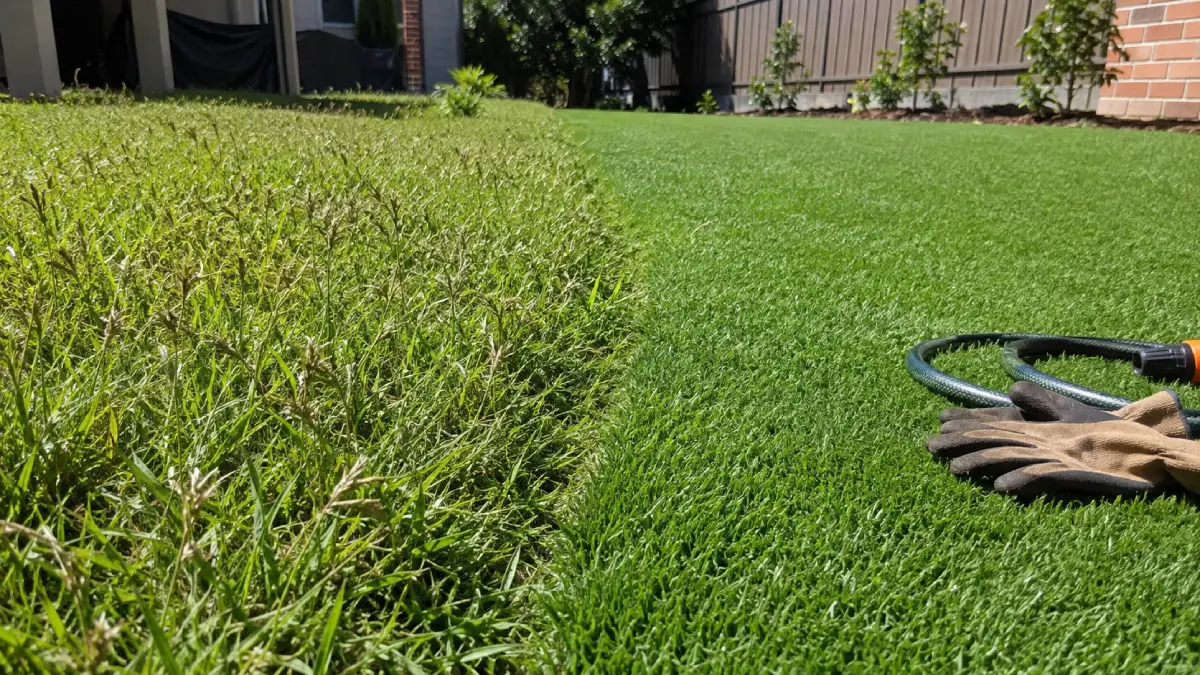
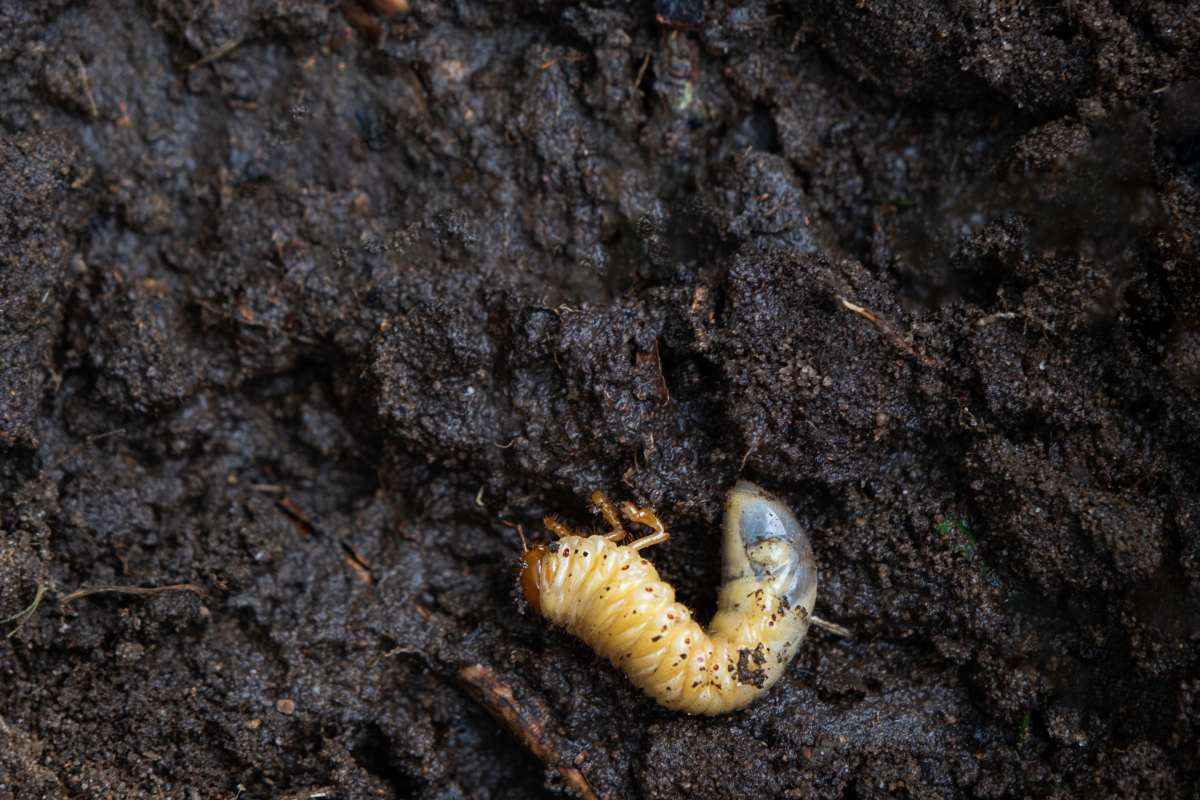
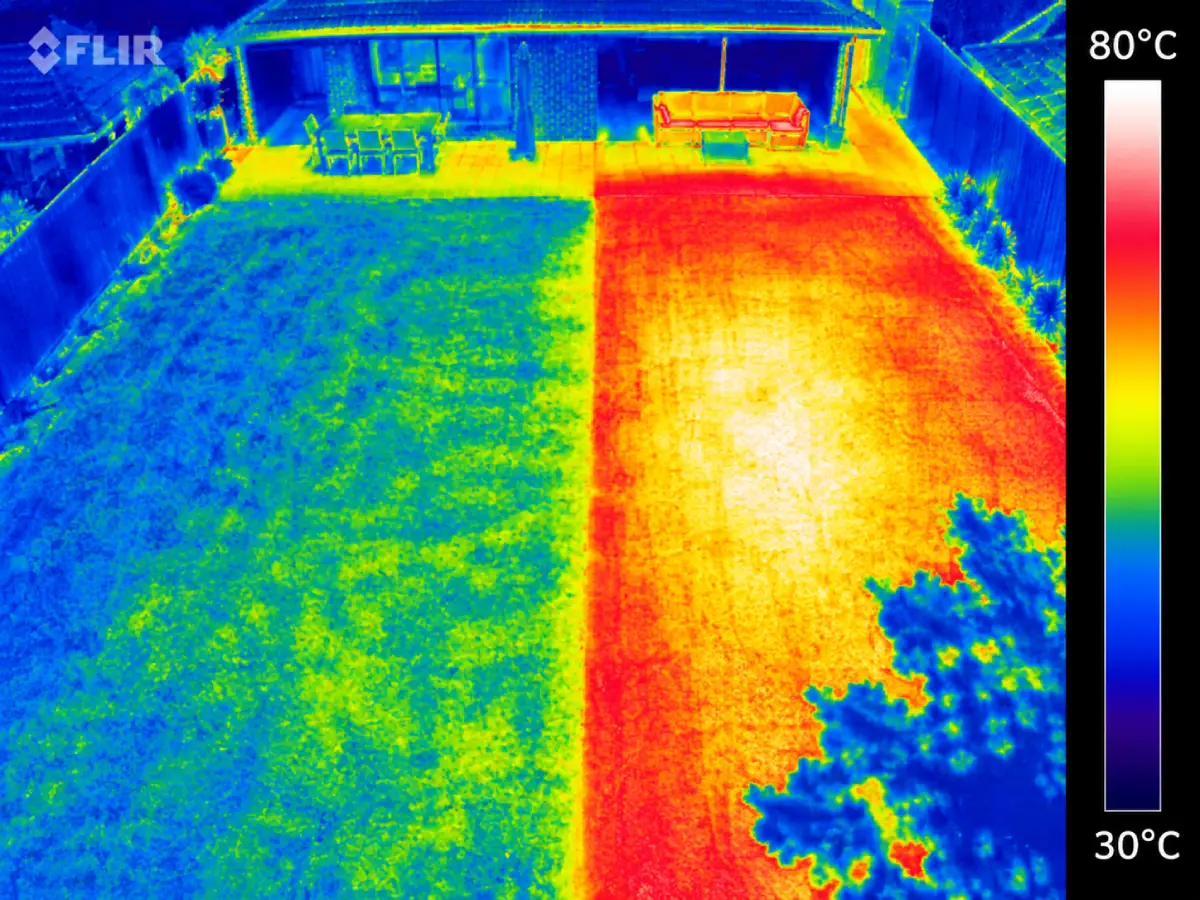
Hot enough to burn skin, and not only in summer. Surface temperatures recorded on Sydney yards, playgrounds and school grounds tell the story better than any sales pitch. The numbers are specific enough to plan around.
| Date and site | Air temp | Synthetic turf | Natural grass |
|---|---|---|---|
| 16 Jan 2021, Western Sydney playground | 28.2°C | 75.1°C | not measured |
| 6 Dec 2020, same site | 31.2°C | 57.4°C | not measured |
| 4 Jan 2020, Bennalong Park | 40°C+ | 85°C | not measured |
| 1 Mar 2021, Jordan Springs | 36°C | 53°C | 34°C green, 42°C dry |
Surface temperature readings, Western Sydney sites, 2020–2021.
Look at the first row again. The air was 28.2°C. That is a nice day. The ground was 75°C.
Three findings matter more than the headline number.
The ten-second barefoot test. Before you sign anything, go and stand barefoot on an existing synthetic lawn at 2pm in February. If you cannot last ten seconds, neither can your kids or your dog. Showrooms are always indoors for a reason.
At a western Sydney school on a 43°C day, sunlit synthetic turf reached 61°C. The shaded half of the same surface sat at 35°C.
That 26-degree gap is the most useful thing in this article, because deep shade is also the one place a real lawn genuinely struggles.
Artificial turf costs roughly three times more to install, then needs replacing inside fifteen years. Sydney 2026 pricing runs $25 to $50 per square metre for natural turf installed, against $80 to $150 for synthetic.
On a 100 square metre backyard: about $2,500 to $5,000 versus $8,000 to $15,000. Work out your own area first, with how much turf do I need.
Natural turf · 100m²
$2,500–$5,000
Laid once. No replacement date.
Synthetic · 100m²
$8,000–$15,000
Again in 8–15 years, plus removal.
The gap is mostly underground. Synthetic turf is a six-layer build (fibres, backing, infill, shock pad, gravel sub-base, drainage) and the base costs more than the grass. A cheap base under good turf fails inside two seasons.
Then comes the line most quotes leave off. Quality synthetic lasts eight to fifteen years, with warranties commonly running to ten. A second installation, plus removal of the first, arrives while you still own the house.
Natural turf has no replacement date. Warm-season grasses spread by runners and heal themselves, so a lawn laid this autumn can still be that lawn in twenty years with routine renovation and repair.
compare the base, not the pile height. Every synthetic quote leads with blade length in millimetres. Ask instead what depth of compacted road base sits underneath and what the drainage detail is. That is the line item that decides whether it is still flat in year six.
| Factor | Natural turf (warm-season, Sydney) | Artificial turf |
|---|---|---|
| Installed cost | $25–$50 per m² | $80–$150 per m² |
| 100m² backyard | ~$2,500–$5,000 | ~$8,000–$15,000 |
| Surface temp on a 28°C day | Close to ambient when moist | 75.1°C recorded |
| Peak recorded | 34°C green, 42°C dry (36°C day) | 85°C (40°C+ day) |
| Effect on nearby air | Cools through transpiration | Adds heat |
| Lifespan | Indefinite, self-repairing | 8–15 years, then full replacement |
| Usable from | Light use 2–3 weeks, full use 4–6 weeks | Immediately |
| Routine care | Mow, fertilise, water, spot-treat weeds | Brush, top up infill, rinse, weed edges |
| Repairs | Patches grow back and blend | Cut-in sections leave visible seams |
| End of life | Composts into soil | Landfill in most cases |
| Best for | Yards with sun and soil access | Deep shade, rooftops, small courtyards |
Yes on growth, no on comfort. A synthetic lawn needs no irrigation to stay alive. That saving is real, and two things complicate it in Sydney.
New turf gets a legal exemption. NSW allows 28 days of unlimited watering for newly laid turf, applied for through Sydney Water before delivery. The heaviest watering period, the one everyone worries about, sits inside a carve-out. Our guide on how often to water new turf covers the week-by-week schedule.
Cooling synthetic turf costs water too. On the numbers it takes roughly 480 cubic metres to drop a synthetic surface by 30°C, and it reheats within minutes because the infill sheds water instead of holding it.
Irrigated grass holds its cooling for hours. So in a Sydney summer you can end up hosing a “water-free” surface you still cannot walk on.
Lay in autumn. Cooler air and reliable rain do most of the establishment watering for you. It is the single cheapest decision in this whole article. See when is the best time to lay turf.
Get one of our team members to contact you and discuss your options!
Grass needs more frequent care. Synthetic needs more expensive care.
A Sydney lawn wants mowing roughly fortnightly through the warm months and monthly or less in winter, plus fertilising two to four times a year. That is the honest cost of a real lawn, and nobody budgets for it properly.
Artificial turf is not maintenance-free, and that is the most common misconception about it. Fibres need brushing upright, infill needs topping up as it migrates to the low corners, and weeds still turn up at edges, seams and drainage holes.
The real difference is what happens when something goes wrong. Lawn problems are frequent, cheap and reversible: a bare patch fills in, a pest problem gets treated, a dry spell recovers.
Synthetic problems are rare, expensive and permanent. Flattened fibres along the path from the back door to the trampoline never spring back. That section gets replaced or it stays flat.
Mow high in summer. Longer leaf shades the soil, holds moisture and crowds out weeds before they germinate. Most people cut too short in January and then wonder why the lawn browns off. More in our lawn mowing tips.
Synthetics win on mud. Natural wins on smell. Neither is automatically the dog option, whatever the showroom says.
Solids lift straight off synthetic turf, which is a genuine advantage in a wet winter. Urine drains through the backing, but the residue stays in the infill and builds up. Without regular rinsing and an enzyme treatment, it gets noticeable, and heat makes it considerably worse.
Grass handles urine biologically, with soil microbes breaking it down. Concentrated spots still burn and need patching, but the yard does not develop a smell.
On drainage, soil absorbs, filters and holds slopes together, which makes grass the practical answer on a graded block. Clay-heavy western Sydney sites need real preparation either way, and skipping it is the number one reason DIY lawns fail. Establishing your new lawn walks through the prep.
Best for dogs: a hard-wearing natural variety that repairs itself, like Kikuyu, on a yard with sun. Choose synthetic only where the area is shaded, covered, or has no soil to drain into.
Most of it goes to landfill. Australia disposes of roughly 130,000 tonnes of synthetic turf a year, about 2.5 million square metres.
The country’s first dedicated large-scale recycling facility opened at Barnawartha in regional Victoria. A Sydney removal faces a long freight run to reach the only proper destination.
That is genuinely improving, and the industry deserves credit for building it at all. For someone replacing a yard in the mid-2030s though, landfill is still the default path.
Natural turf has no disposal event. Clippings compost, and a lifted lawn breaks back down into the soil it came from.
Answer the sun question first. Everything else is detail.
A View Turf · Wilberforce, NSW
Three questions. The first one does most of the work.
Do this now, it takes two minutes. Open your phone’s compass in the middle of the yard. North-facing gets sun most of the day. South-facing behind a two-storey house gets very little from May to August. Then check the same spot at 9am, midday and 3pm on a weekend. Count the hours of direct sun. That number decides this.
Notice how often shade appears in the first list. Shade removes the reason grass fails and the reason synthetic gets dangerous, at the same time. That is why it is the one clean case for going artificial.
Browse the full range on our turf varieties page, or start here:
If your answers point to synthetic, we will tell you. We would rather lose a sale than lay turf into a shaded side passage and watch it thin out by August.
Doing it yourself? The DIY turf guide covers prep, laying and the first month. Want it done for you? We also handle installation and laying.
Get one of our team members to contact you and discuss your options!
Burn risk starts once daytime air reaches 27°C. Western Sydney surfaces have been recorded at 75°C on a 28.2°C day and 85°C on a day above 40°C. Shade cut one of those surfaces by 26°C.
Not usually, once replacement counts. It costs about three times more to install in Sydney, then needs full replacement plus removal within eight to fifteen years.
NSW grants a 28-day unlimited watering exemption for newly laid turf, applied for through Sydney Water before laying. Confirm current rules before booking a delivery date.
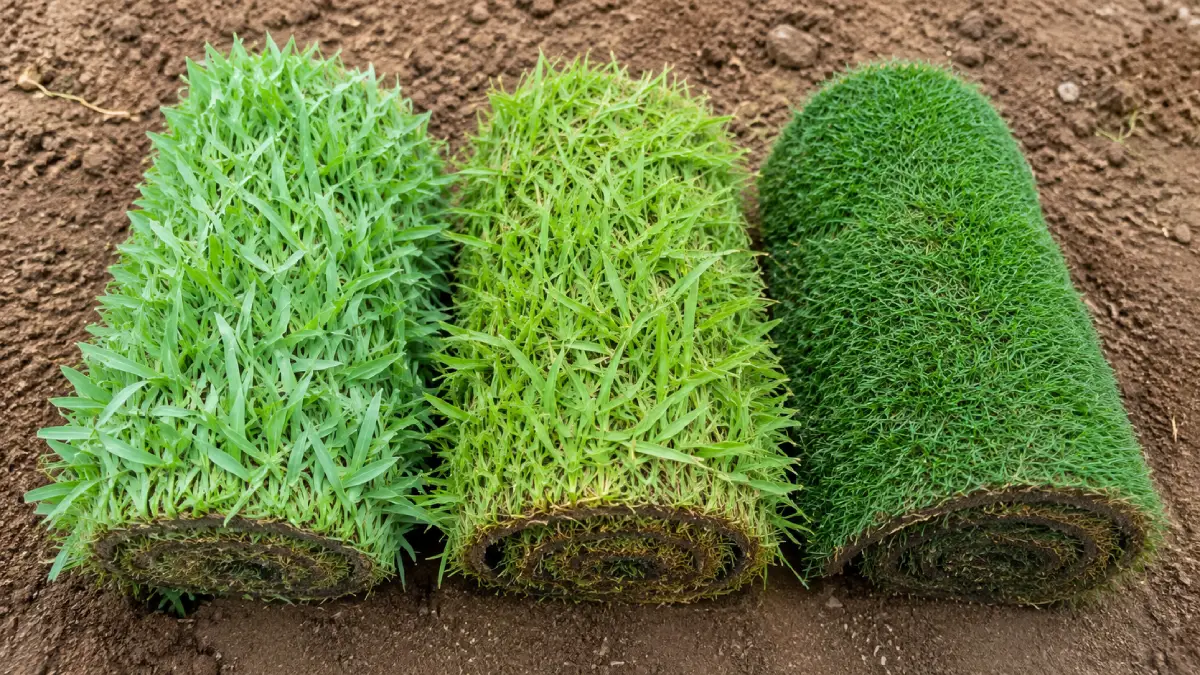
Soft-leaf buffalo. Matilda grows in full sun through to around 85% shade, Sir Walter to around 70%. Kikuyu and couch both need full sun.
Yes, at edges, along seams and through drainage holes, plus algae where sand or organic infill is used. Lower volume than a lawn, but fiddlier to remove.
Light traffic at two to three weeks, normal use at four to six weeks once it passes the tug test. Grip a corner and pull gently. If it resists, the roots have taken.
There is no single winner here, and any page that names one is selling you something. We sell grass and we still will not name one.
The decision turns on your site, not the products. Sun, soil depth, who uses the space in summer, and whether you are budgeting for one decade or three will settle it faster than any feature list.
For most Sydney backyards, the heat data decides it. A surface that reaches 75°C on a 28°C day is not a family lawn, and Sydney gets well over a hundred days a year warm enough to produce that. Add triple the installation cost and a landfill problem at the end, and grass takes it on an open block.
Where the yard is deeply shaded, built over a slab, or too small to mow, that reverses completely.
Go and count your sun hours. The variable that matters most is one you can measure yourself this weekend.
We grow buffalo, kikuyu and couch at our Wilberforce farm in the Hawkesbury, cut fresh to order and on your driveway the next day across Sydney and NSW.
Tell us your aspect, your shade and your soil, and you will get a straight answer about whether your site suits a real lawn.
Call us: 1800 799 222
Email: sale@avt.com.au
Visit: Ebenezer Wharf Road, Wilberforce NSW 2756
A View Turf