
Home » Buffalo vs Kikuyu vs Couch Grass: Which Is Best?
Get one of our team members to give you a call to discuss your project!
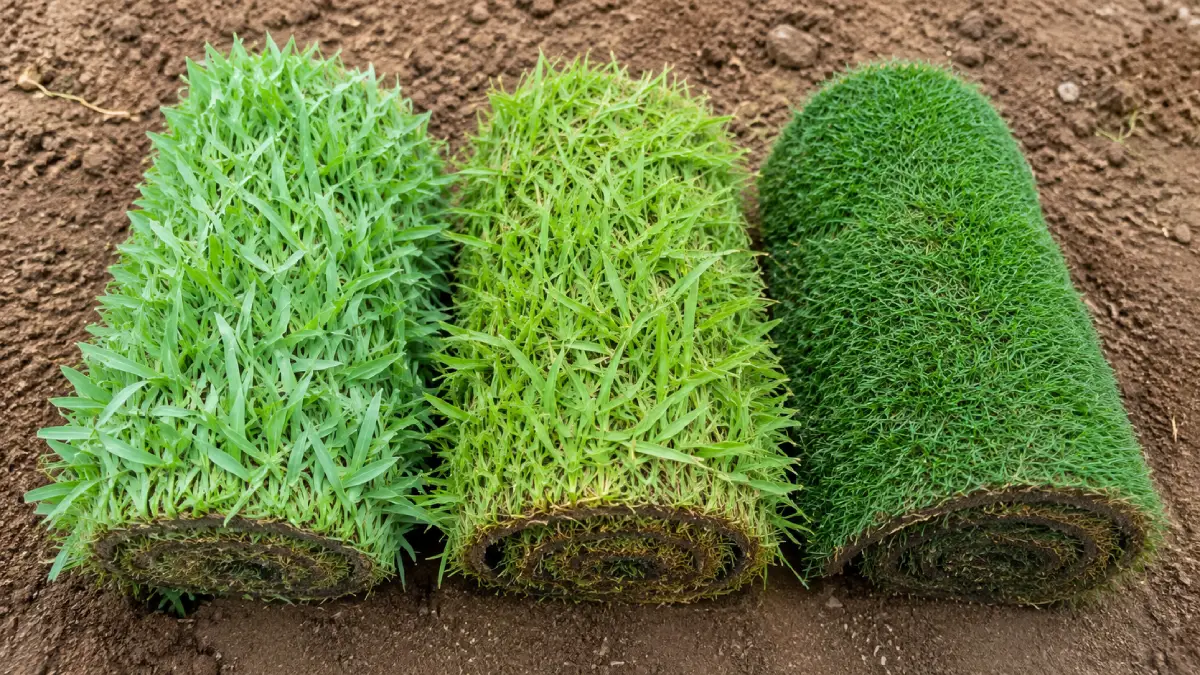
Short answer: Buffalo wins on shade. Kikuyu wins on speed and price. Couch wins on looks. Which suits your place comes down to one number: hours of direct sun on your worst patch in winter. Under 4 hours, buffalo is your only real option. Over 5, all three are in play and the decider is how often you’ll actually mow.
We’ve had this conversation a few thousand times, usually with someone at the Wilberforce gate holding up a photo of their backyard. Here’s the version we’d give you with the grass under your feet.
One fact does most of the heavy lifting. Buffalo runs across the top of the soil. Kikuyu and couch also run underneath it.
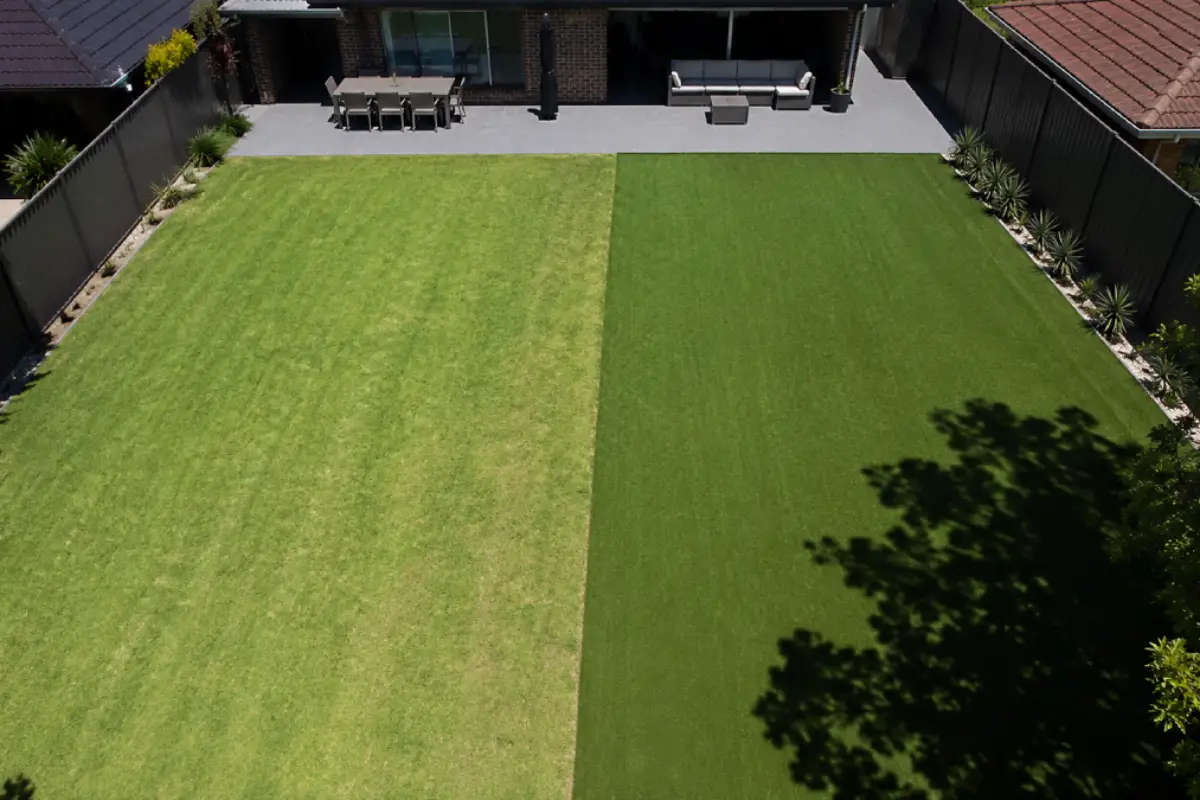
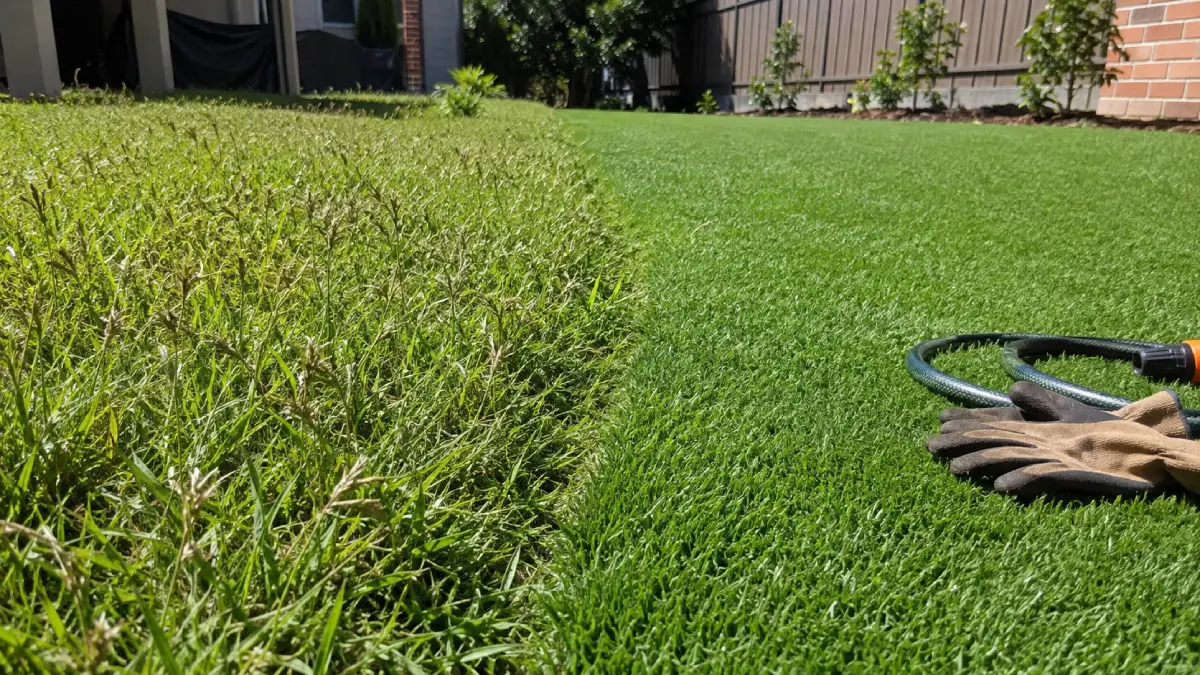
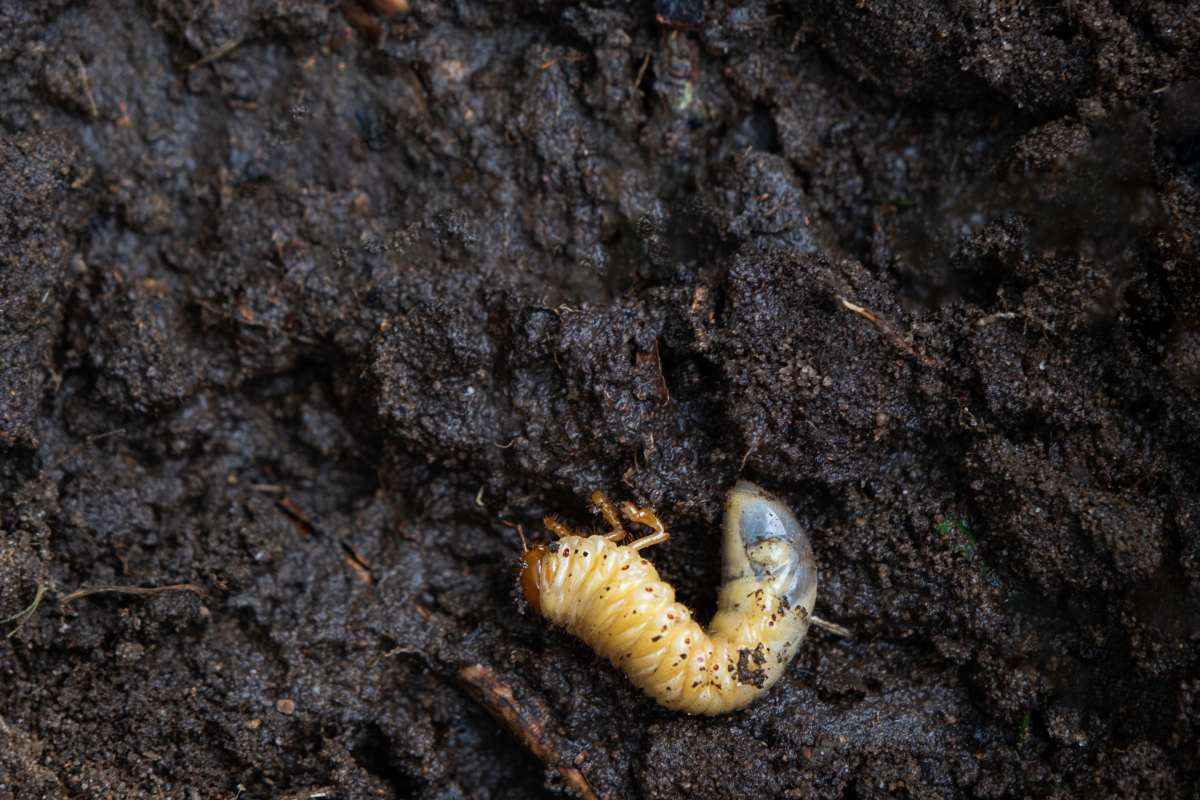
Runners on the surface are stolons. Runners under the soil are rhizomes. Buffalo has stolons only. Kikuyu and couch have both.
Underground runners sit below mower blades, football boots and dog claws. That bit of armour changes four things you’ll care about.
1
Healing. Kikuyu and couch push shoots straight up through a bare patch. Buffalo crawls a runner in from the edge, so it takes weeks, not days.
2
Renovating. Scalp Kikuyu in late spring, and it comes back thicker. Do that to buffalo, and you strip out every growing point you had.
3
Containing. Stolons climb over your edging where you can see them. Rhizomes go under it and surface on the far side, already settled in.
4
Spraying. Kill the visible Kikuyu runners in a buffalo lawn, and the rhizomes send up new ones a fortnight later.
Pull up a runner before you commit. If it’s pale and came from under the soil, you’re holding a rhizome, and that lawn will travel further than you expect.
Soft Leaf Buffalo
Kikuyu
Wintergreen Couch
Leaf
Broad, ~10 mm, rounded, soft
Medium, 4–7 mm, coarse
Fine, under 4 mm, dense
Spreads by
Surface runners only
Surface and underground
Surface and underground
Min. winter sun
3–4 hours
5–6 hours
5–6 hours
Mowing height
30–50 mm
25–40 mm
10–30 mm
Mow every
10–14 days
5–7 days
7–10 days
Takes wear
Moderate to good
Good
Good in sun, poor in shade
Heals damage
Slowly
Fastest of the three
Fast
Sydney winter colour
Holds well
Browns off, worse with frost
Holds longest
Weed spray options
Narrowest, buffalo-safe only
Widest
Wide
Change your mind later?
Yes
Not really
Mostly
Read those wear and healing rows separately. All three are warm-season grasses, so none repair winter damage in winter. Year-round traffic means buying for wear tolerance and pencilling in a spring repair. Full specs sit on our turf varieties page.
Get one of our team members to contact you and discuss your options!
Almost everyone buys turf in spring. That’s exactly the problem.
Sydney’s midday sun sits about 80 degrees above the horizon in late December and about 33 degrees in late June. Winter shadows don’t stretch a little. They stretch enormously.
At midday in June, expect a shadow around 1.5 times the height of whatever casts it. Measure your fence, multiply by 1.5, mark that line on the lawn. That’s your problem zone.
Shadows fall south, so your trouble spots are south of the northern fence, south of the house, and south of any mature tree.
One note on shade ratings. “Up to 70% shade” means filtered light, the sort you get under an open jacaranda all day. It does not mean two hours of sun, then a brick wall, and that’s where most shade-tolerant lawns quietly thin out.
Broad, soft leaf with a rounded tip, and the best shade tolerance here by a comfortable margin. Sir Walter and Sydney Buffalo handle around 70% shade, Matilda stretches to 85%. That’s why buffalo owns the leafy inner and northern suburbs.
It shrugs off coastal salt air, knits tight enough to shut weeds out, and needs the fewest mows of the three.
The catch is thatch. That spongy layer builds up over the years and you can’t shortcut it by scalping. Its spray list is the shortest too, so stick to products that name buffalo on the label and read our weeding guide first.
Trees, fences, two-storey neighbours, bare feet, and anyone who’d rather not mow every weekend.
You need a worn dog track gone by next Saturday.
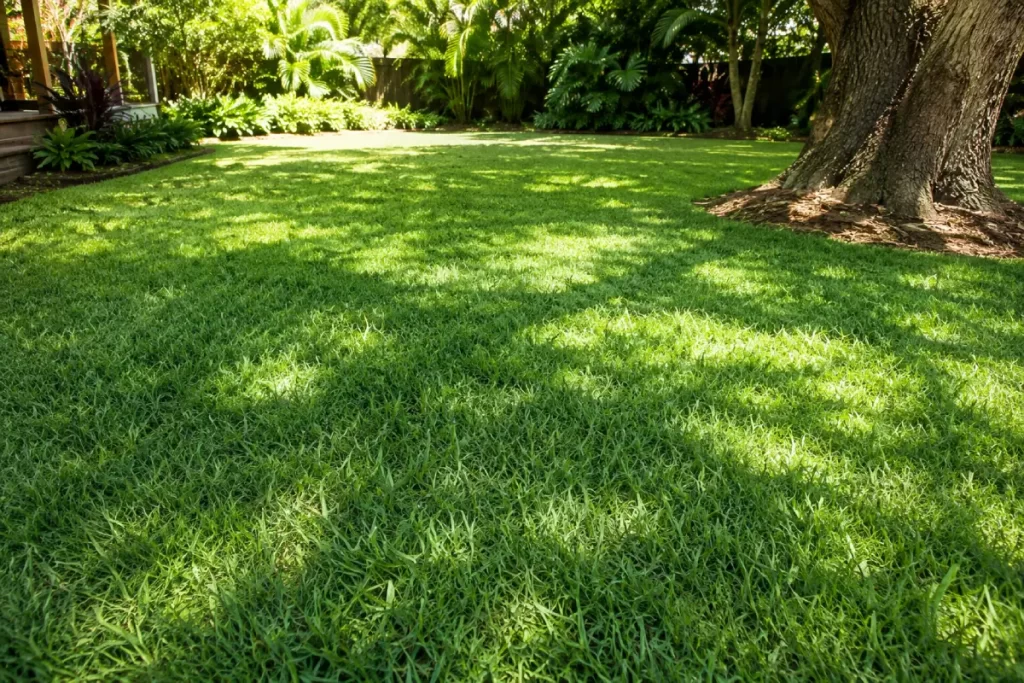
Kikuyu is the labrador of lawns. Tireless, brilliant with kids, and it will absolutely get into your garden beds.
Nothing turns bare dirt into usable lawn faster, nothing costs less per square metre, and nothing heals quicker. That’s why it covers half the school ovals in NSW.
The bill comes in three parts. It’s coarse underfoot. It wants mowing every 5 to 7 days in summer or it seeds and goes shaggy. And it browns off over winter, more so out our way in the Hawkesbury where the frost lands.
Then there’s the one-way door. No selective spray takes kikuyu out of a buffalo lawn. Lay it and you’ve narrowed what you, or whoever buys next, can do with that yard.
Plenty of Sydney councils list kikuyu as a priority weed because it smothers native seedlings. It’s still a completely legitimate lawn, and we sell plenty of it, but if you back onto bushland or a creek reserve, ring your council before you order.
Big sunny blocks, tight budgets, dogs, kids, nature strips.
You’ve got shade, fussy bare feet, bushland at the back fence, or a sale coming up.
Solid edging goes in before the turf. Every Kikuyu customer gets that line from us, and the ones who wave it off call back in March.
Finest leaf of the three, and nothing else gives that manicured, carpet finish. For framing a pool or a formal frontage, Wintergreen Couch is the sharpest thing on our farm, and it holds winter colour longest without turning purple.
Couch is the white shirt of lawns. Immaculate when you look after it, and very obviously not when you don’t.
It’s superb on fairways because they get two things most backyards don’t: unbroken sun and a low cut from the right machine. Put it in partial shade, cut it at 40 mm with a rotary, and it goes puffy and thin while weeds stroll into the gaps. The grass isn’t the problem. The mismatch is.
Full sun, pool surrounds, formal frontages, and people who genuinely enjoy mowing.
Mowing is a job you keep postponing, or the yard carries any real shade.
Budget for a cylinder mower. It’s the difference between a couch lawn and that couch lawn.
Kikuyu is the cheapest of the three to buy and the dearest to own. That reversal surprises people more than anything else here.
Across eight months of growth, a 6-day Kikuyu cycle is roughly 40 mows. Buffalo on a 12-day cycle is roughly 20. Pay someone, and that’s a doubled line item every year you own the house.
Size your job with our turf calculator, then grab free quote for current pricing.
First match is usually your answer.
1
Shade, or south side of a two-storey. Buffalo, if it gets 3 to 4 winter hours. Under 2, no lawn holds, and you’re better off paving.
2
Kids, dog, full sun, tight budget. Kikuyu, edging in first.
3
Pool or formal frontage, full sun, you like mowing. Couch.
4
Bare feet come first. Buffalo. Kikuyu’s coarseness is the regret we hear most from families who bought on price.
5
Bushland or creek at the back fence. Not Kikuyu.
6
Selling within two years. Buffalo or couch. Kikuyu limits the next owner.
7
Sun and shade in one yard. Buffalo, the only one that works at both ends.
Our establishment guide and watering and mowing pages cover the first six weeks, which matter more than the variety you picked.
Get one of our team members to contact you and discuss your options!
Kikuyu in a sunny yard, because it heals fastest. Buffalo, where there’s shade and it’s softer to lie on, but worn tracks take weeks rather than days.
Buffalo in the shade and couch in the sun work fine with edging at the join. Never pair kikuyu with buffalo. Kikuyu wins, and you can’t push it back.
Fewest mows by a clear margin. The trade-offs are thatch, a short spray list, and slow patch repair. Low frequency rather than no effort.
None of the three wins outright, and anyone who tells you otherwise is clearing stock.
Sun decides first. Buffalo copes on 3 to 4 winter hours. Kikuyu and couch want 5 to 6, measured in June rather than January.
Root structure decides second. Buffalo heals slowly and can’t be scalped. Kikuyu and couch heal fast and travel further than you’d like.
Then it’s taste and time. Kikuyu is fastest, cheapest, coarsest and the most mowing. Couch looks the best, and only if you cut it low and often. Buffalo asks least of your weekends and most of your budget.
Reversibility breaks the tie. Buffalo and couch keep your options open. Kikuyu closes them.
Measure your worst patch in June, be honest about how often you’ll mow, and the choice makes itself.
We grow all three at Wilberforce and you’re welcome to turn up and stand on them. Feeling a broad buffalo leaf against coarse kikuyu settles it faster than any table we could write.
Tell us your aspect, roughly how much winter sun the yard gets, and what will happen on it. We’ll tell you which fits, and if none of them suit, we’ll say that too.
Call us: 1800 799 222
Email: sale@avt.com.au
Visit: Ebenezer Wharf Road, Wilberforce NSW 2756
A View Turf