
Home » How Often Should You Water New Turf? The Complete Guide for Sydney & NSW Homeowners
Get one of our team members to give you a call to discuss your project!
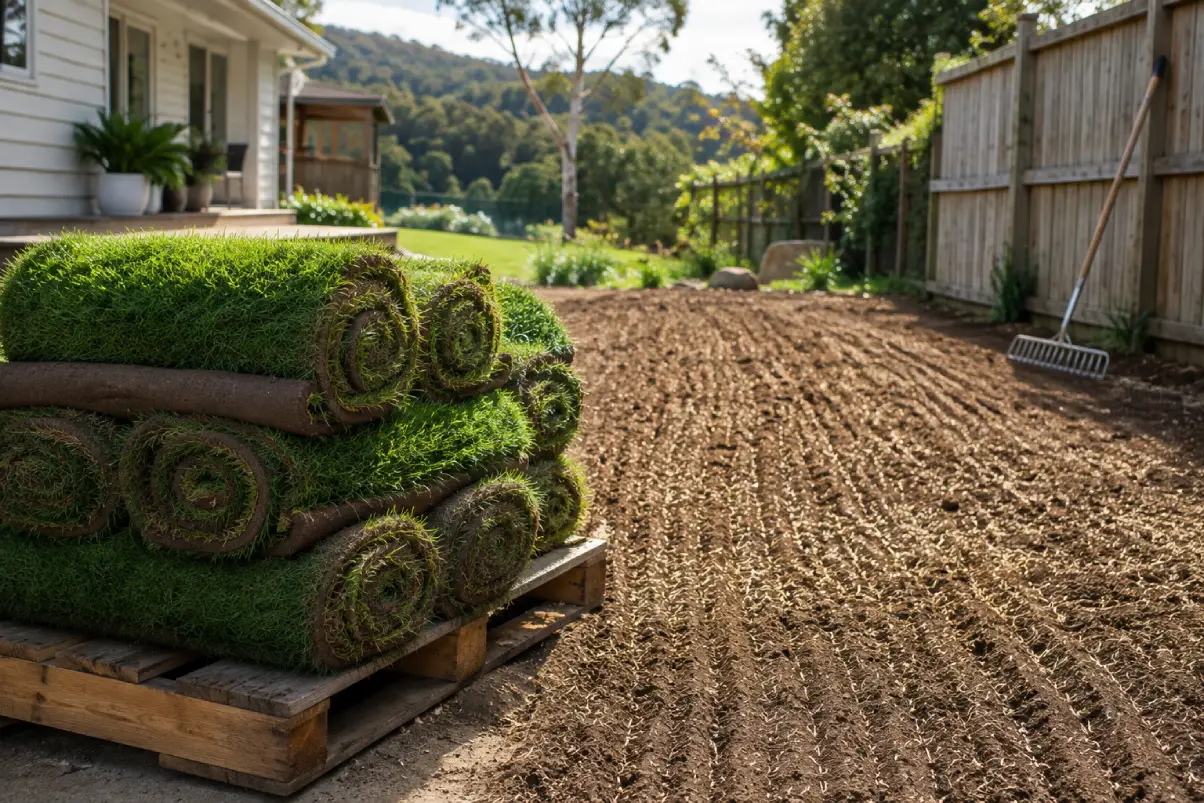
You have invested in a brand-new lawn. The turf is down, it looks incredible, and now the most important job begins: keeping it alive long enough to establish. Watering new turf correctly is the single biggest factor in whether your lawn thrives or fails in those critical first weeks. Many homeowners get this wrong in one of two directions — watering too little and letting the turf dry out, or going too heavy and drowning the roots before they have a chance to take hold.
At A View Turf, we cut fresh turf direct from our Sydney farm and deliver next day across NSW. We have seen lawns go from strength to strength when our customers nail the watering schedule, and we have seen the disappointment when they miss the mark. This guide will walk you through exactly how often to water new turf, how much water to apply, and how to adjust your approach across each season and growth stage.
Unlike an established lawn, newly laid turf has not yet developed roots into the soil beneath it. During the first few weeks, the grass relies heavily on moisture retained within the turf rolls and the underlying soil.
The goal during this period is to keep both the turf and the soil consistently moist, encouraging roots to grow downward and establish themselves.
Proper watering helps:
Without adequate moisture, new turf can dry out quickly, particularly during warmer months.
The most important watering occurs immediately after the turf is laid.
As soon as installation is complete, the turf should be watered thoroughly. The objective is to soak the turf and the soil beneath it so moisture penetrates deeply.
Many turf professionals recommend watering until the soil beneath the turf is moist to a depth of approximately 100–150mm.
This first watering helps:
Never leave newly delivered turf sitting for extended periods before installation, and always water immediately after laying.
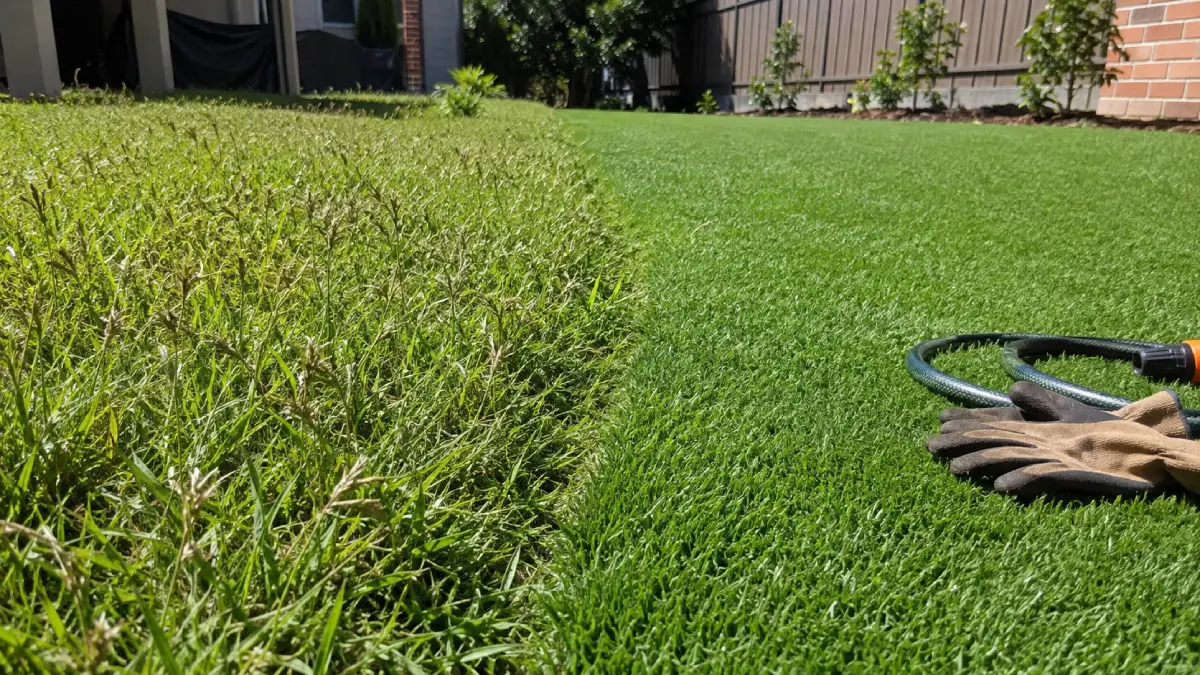
The first fortnight after laying is the most critical period. Your new turf needs to stay moist at all times — not waterlogged, but consistently damp through to the soil beneath. In most conditions, this means watering once daily, deeply enough that moisture penetrates through the turf and into the top 75 to 100mm of soil below.
In hot, dry, or windy conditions — common across Sydney’s western suburbs and inland NSW — you will need to water twice daily: once in the early morning before temperatures rise, and again in the late afternoon. Never water in the middle of the day in summer, as the water will evaporate before it can do any good and the turf can be scorched.
A practical rule for the first two weeks: press your finger through the turf into the soil below. If it feels dry, the lawn needs water immediately. If it feels cool and damp, you are on track.
By week three, your turf should be beginning to root into the soil. You can now reduce watering frequency slightly to encourage roots to grow deeper in search of moisture. Aim for every second day, but increase back to daily if you experience a dry spell or temperatures climb above 30 degrees Celsius.
Continue to water deeply at each session. A long, slow soak is far more effective than a quick sprinkle. You want moisture to penetrate at least 75mm into the soil so the roots are encouraged to chase it downwards rather than staying shallow.
From around week five, your turf should be well on its way to full establishment. Perform the tug test: grip a corner of the turf and gently pull. If it resists and feels anchored in the soil, the roots are developing well. If it lifts easily, maintain the more frequent schedule for another week or two.
Once your turf passes the tug test, transition to a mature watering schedule: deep, infrequent watering two to three times per week, or less if rainfall is adequate. Established turf actually benefits from being watered deeply but infrequently. This encourages deeper root growth and builds long-term drought tolerance.
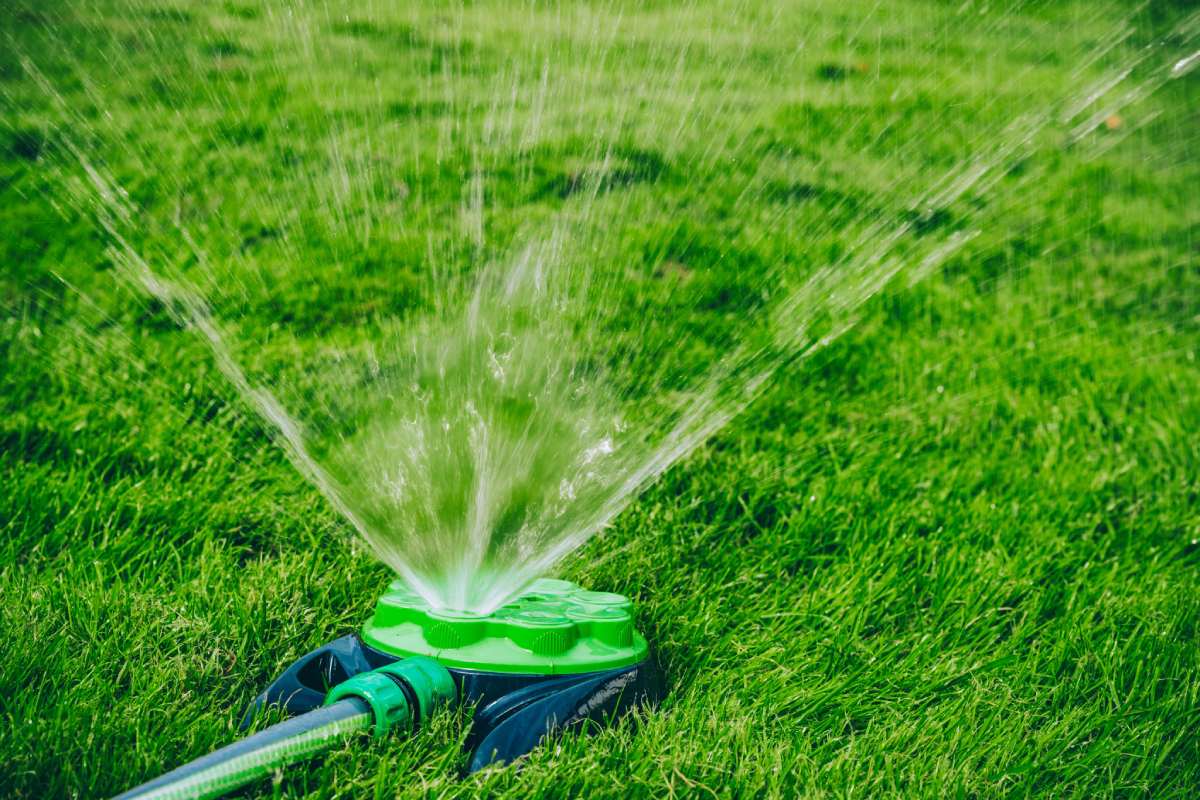
Absolutely — and this is where many homeowners come unstuck. The season you lay your turf has a significant impact on the watering schedule you will need to follow.
If you are still deciding when to install, it is worth reading our dedicated guide on “When Is the Best Time to Lay Turf? A Complete Guide for Sydney & NSW Homeowners” — available on the A View Turf blog. Timing your installation correctly can dramatically reduce the watering burden and give your lawn the best possible start. Autumn, for example, is the optimal window for NSW precisely because cooler temperatures and reliable rainfall make establishment far easier.
For those who have already laid — or are about to lay — here is how to adapt your watering based on the time of year:
Summer Watering
Summer is the most demanding season for new turf. Heat, low humidity, and drying winds can cause freshly laid turf to show stress within hours if watering is missed. In Sydney’s summer, plan on twice-daily watering for the first two to three weeks: early morning and late afternoon. If you have an automatic irrigation system, summer is absolutely the time to use it.
Watch the turf closely during heatwaves. A blue-grey tinge or leaves folding lengthways are signs of heat stress — water immediately if you see these signs. Soft-Leaf Buffalo and our Matilda Buffalo variety are more heat-tolerant than many alternatives, making them a smart choice if you are laying in summer and want a little more margin for error.
Autumn Watering
Autumn is the best time to lay turf in NSW, and the reduced watering demands reflect why. Cooler temperatures and more reliable rainfall mean that once-daily watering is usually sufficient in the first two weeks, tapering to every second or third day by week three. Autumn mornings often bring dew, which contributes meaningful moisture — factor this in and avoid overwatering, as waterlogged soil can cause root rot and fungal disease.
Spring Watering
Spring sits between autumn and summer in terms of watering demand. Begin with once-daily watering and monitor conditions closely. As temperatures rise through October and November, be prepared to increase to twice daily if the turf shows any signs of stress. Spring-laid turf in Sydney often gets a boost from seasonal rainfall, but it can switch to dry, hot conditions quickly, particularly in years affected by La Nina or El Nino patterns.
Winter Watering
In Sydney and coastal NSW, winter installation is possible and watering demands are at their lowest. Soil retains moisture much better in cooler months, and evaporation is slow. Water every two to three days during the first fortnight, then reduce further as the turf begins to root. Avoid overwatering in winter as soggy soil in cool conditions invites fungal issues and slows root development.
Frequency is only half the equation. Volume matters just as much. Watering lightly and frequently keeps moisture at the surface but does not encourage roots to grow deep. Deep watering produces deep roots, and deep roots mean a resilient, drought-tolerant lawn.
As a general guide, new turf needs approximately 25 to 35mm of water per session in warm weather, and 15 to 20mm in cooler months. You can measure this easily by placing a shallow container — a tuna tin works perfectly — in your irrigation zone and checking how much water accumulates during a session.
Alternatively, water steadily and check with your finger. When you can push your finger through the turf and feel moist soil 50 to 75mm deep, you have applied enough water.
Signs of Underwatering
If you spot any of these signs, water immediately and increase your frequency going forward. Turf can recover from mild dehydration if caught early, but prolonged drought stress in the establishment phase can cause permanent damage.
Signs of Overwatering
If you suspect overwatering, allow the soil to dry out between watering sessions. Compacted or clay-heavy soils, which are common in parts of western Sydney, can hold excess moisture and compound the problem. A quality soil wetting agent can help improve water distribution and drainage in these situations.
Get one of our team members to contact you and discuss your options!
Summer presents the greatest challenge for new turf establishment.
Higher temperatures increase evaporation and place greater stress on the grass.
During hot weather, you may need:
Never allow newly laid turf to dry out during heatwaves.
Spring often provides ideal conditions for turf establishment.
Moderate temperatures and seasonal rainfall can reduce watering requirements while supporting healthy root growth.
Autumn is another excellent time to install turf.
Cooler temperatures generally mean:
Watering remains important but is usually less intensive than during summer.
Winter lawns typically require the least frequent watering.
Cool temperatures slow evaporation and reduce water demand.
However, newly laid turf should still be monitored to ensure the soil remains adequately moist.
Sandy soils drain quickly and hold less moisture.
They often require:
Clay soils retain water longer.
While this can reduce watering frequency, care must be taken not to overwater.
Waterlogged clay soil can:
Loamy soils provide an excellent balance of drainage and moisture retention.
These soils generally support the most efficient watering practices.
So, how often should you water new turf?
For most Australian lawns, newly laid turf should be watered thoroughly immediately after installation and then kept consistently moist during the first two weeks. This often means watering once or twice daily, with additional watering required during hot or windy conditions.
As the roots establish, gradually transition to deeper, less frequent watering to encourage strong root growth and long-term lawn health.
Every lawn is different, and factors such as weather, soil type, and turf variety will influence watering requirements. By monitoring moisture levels and adjusting your watering schedule accordingly, you’ll give your new lawn the best possible start.
If you’re planning a new lawn or need advice on selecting the right turf for your property, contact A View Turf. Their experienced team can recommend the ideal grass variety and provide expert guidance on establishing a healthy, vibrant lawn.
In the first week, water daily at minimum — and twice daily in hot, dry, or windy conditions. The goal is to keep the soil beneath the turf consistently moist while the grass begins to root. Check with your finger each day: if the soil directly below the turf feels dry, water immediately. If it feels cool and damp, you are on schedule.
Yes. Overwatering is just as damaging as underwatering. Saturated soil suffocates developing roots, promotes fungal disease, and causes turf to turn yellow or pale. The soil should feel damp and cool, not waterlogged. If water is pooling on the surface or running off, reduce your volume and apply water more slowly so it can soak in gradually.
Early morning is ideal. Watering before the heat of the day minimises evaporation losses and gives the turf surface time to dry slightly, reducing fungal risk. Avoid watering at midday in summer — most of the water evaporates before it can penetrate. Also avoid late evening watering in humid conditions, which can promote overnight fungal growth.
The tug test is the most reliable indicator. Grip a corner of the turf and pull gently — if it resists and feels anchored, the roots are establishing well and you can begin to reduce watering frequency. Most turf achieves solid establishment within four to six weeks under good conditions, though cooler winter temperatures can extend this timeline. Once established, transition to deep, infrequent watering two to three times per week.
Not necessarily. Brown or grey-tinged new turf is most commonly a sign of dehydration rather than death. Water immediately and thoroughly, then increase your frequency going forward. To check if the turf is still alive, gently pull at a small section — if the base is green and moist, the plant is viable. If it crumbles dry and pale throughout, that section may be beyond recovery, but the surrounding lawn can often still be saved with improved watering.
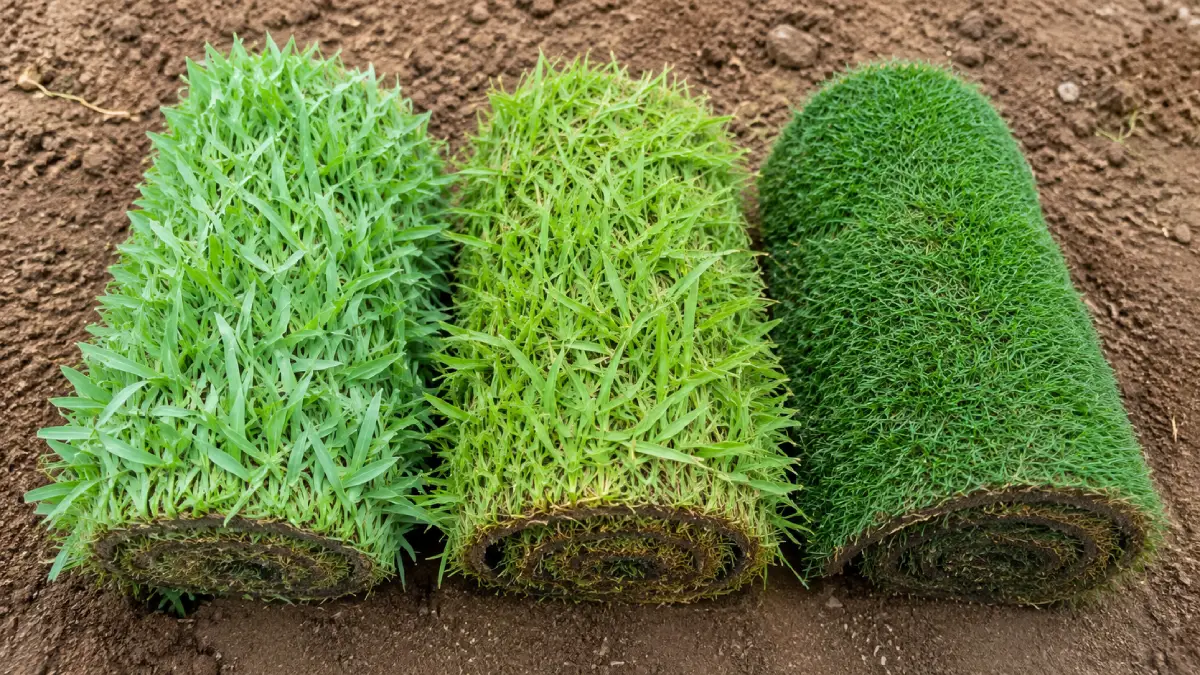
The general schedule is similar across varieties, but some grasses are more forgiving than others during establishment. Matilda Buffalo and Soft-Leaf Buffalo are more drought and heat tolerant, giving you slightly more margin if a watering is missed. Kikuyu is a vigorous grower that establishes quickly in warm weather but needs consistent moisture in the early weeks. Couch is similar to kikuyu in its warm-season establishment needs. Regardless of variety, the first two weeks are critical for all turf types — do not skip or reduce watering during this window.
From the moment your turf is cut at our Sydney farm to the day it passes the tug test in your backyard, we are here to help you get the best result. We supply premium Matilda Buffalo, Soft-Leaf Buffalo, Kikuyu, and Couch turf with next-day delivery across NSW — and we back every order with straightforward, practical advice based on years of experience in the Sydney turf industry.
Have a question about watering, establishment, or choosing the right variety for your yard? Get in touch with our team today.
Call us: 1800 799 222
Email: sale@avt.com.au
Visit: Ebenezer Wharf Road, Wilberforce NSW 2756
A View Turf