
Home » How to Lay Turf the Right Way (Step-by-Step)
Get one of our team members to give you a call to discuss your project!
A lush, green lawn can completely transform the look and feel of your outdoor space. Whether you’re renovating a tired backyard, landscaping a new home, or replacing a patchy lawn, laying fresh turf is one of the quickest ways to achieve an instant result. However, successful turf installation involves much more than simply rolling out grass and hoping for the best.
In fact, most turf failures occur because of poor preparation, incorrect installation techniques, or inadequate aftercare. The good news is that with the right approach, laying turf is a project that many homeowners can successfully complete themselves.
This step-by-step guide will walk you through everything you need to know to lay turf properly and give your new lawn the best possible start.
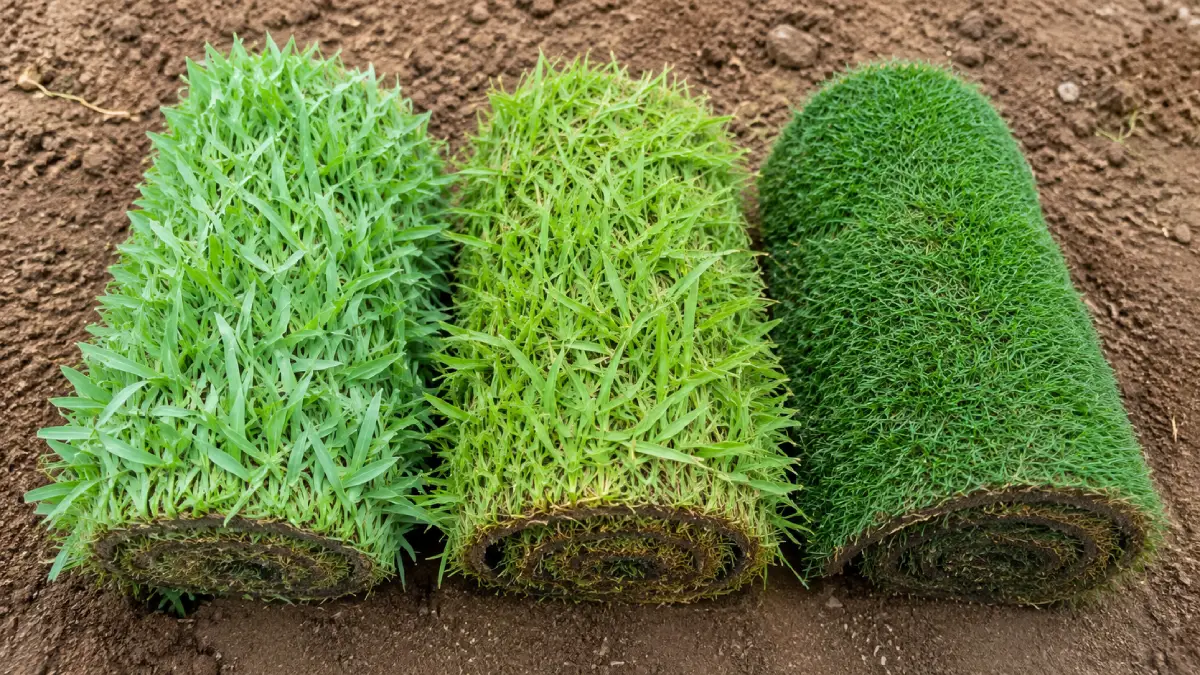
Before you lift a shovel, you need to pick the right grass. Not all turf varieties are suited to every yard, and choosing the wrong one is an expensive mistake. The key factors to consider are sun exposure, foot traffic, soil type, and how much maintenance you’re willing to put in.
Here’s a quick guide to popular varieties available from A View Turf:
If you’re unsure which variety suits your yard best, give the team at A View Turf a call on 1800 799 222. Our staff can help you make the right call based on your specific conditions.
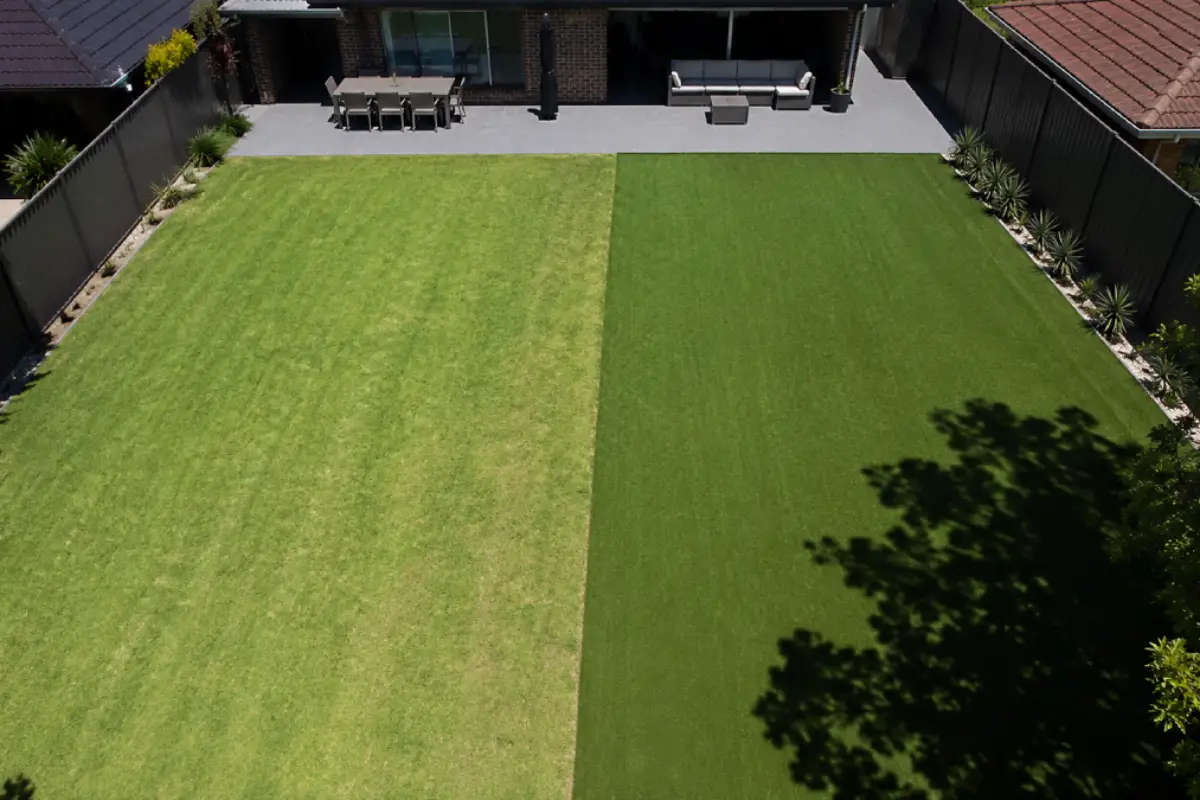
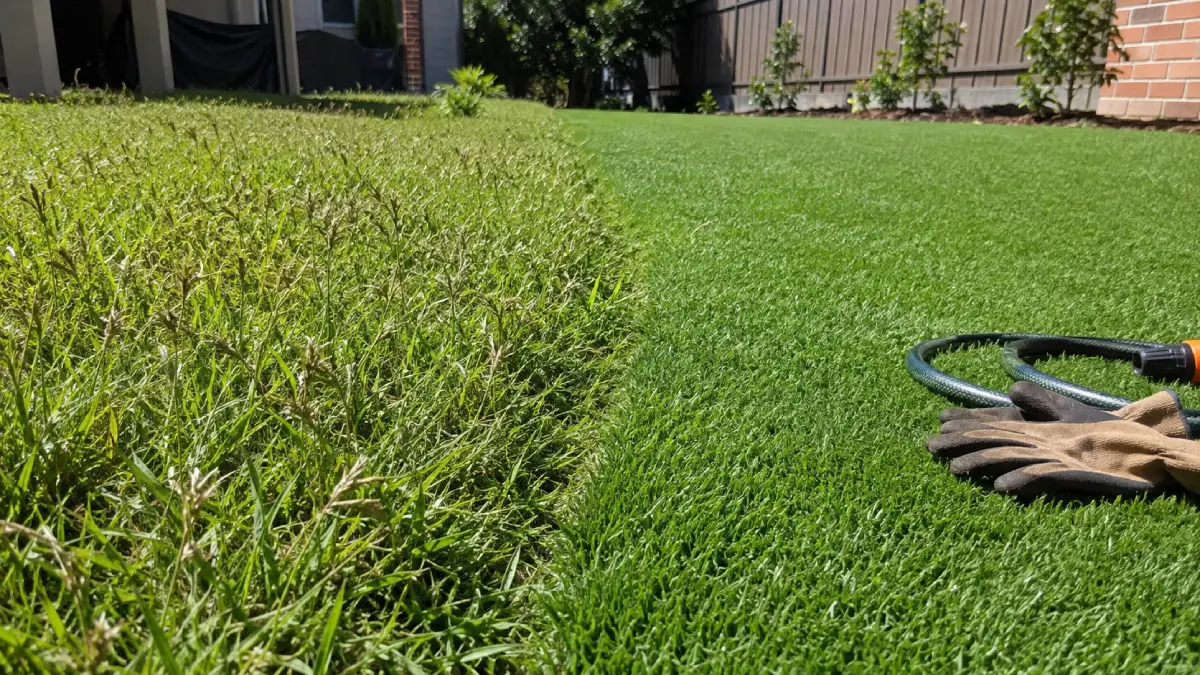
Measure the length and width of your lawn area and multiply them to get the total square metres. For irregular shapes, break the area into smaller rectangles or triangles, calculate each section separately, and add them together. Always add 5–10% extra to account for cutting and wastage around edges.
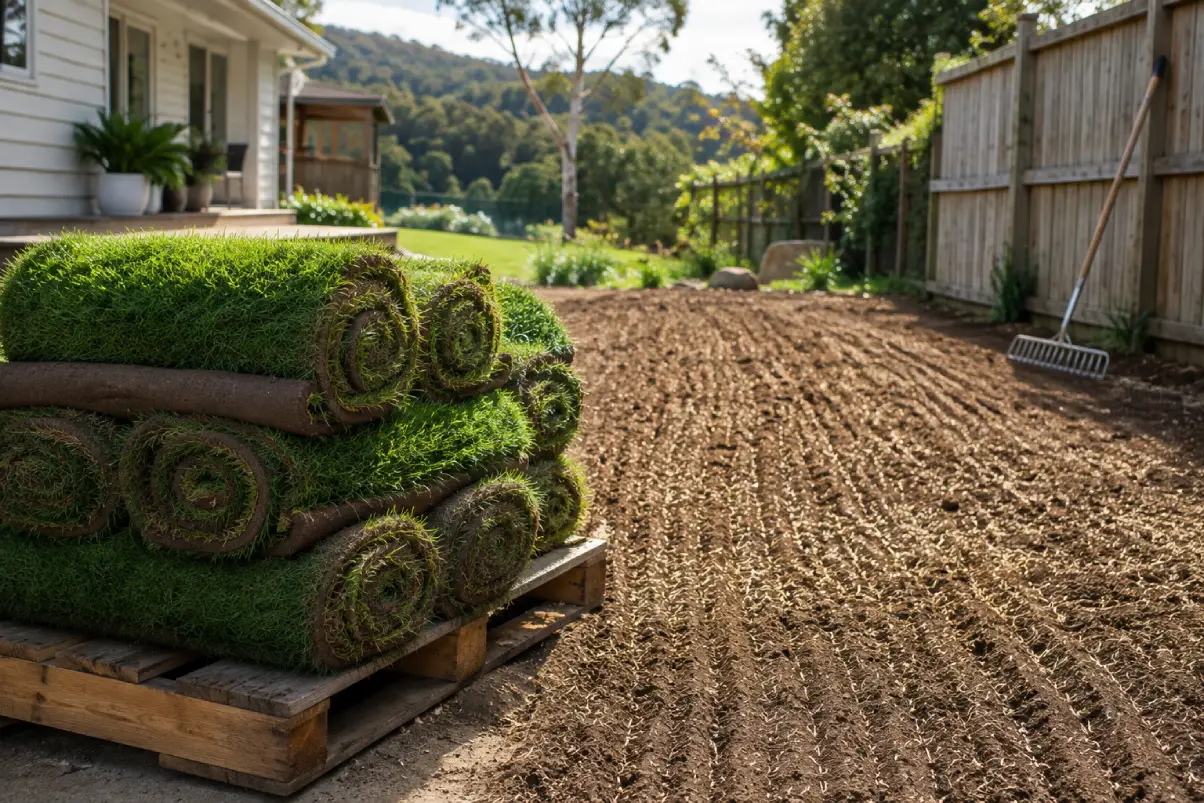
Order your turf as close to your installation day as possible. All A View Turf rolls are cut fresh to order and delivered next day across Sydney and NSW, so you can be confident the turf arriving at your door is at peak freshness. Once your turf is delivered, aim to lay it within 24 hours — especially during warm weather. Leaving rolled turf sitting for longer than that can cause it to heat up and deteriorate.
This is the step most DIYers underestimate — and it’s arguably the most important one. Good soil preparation sets up your turf for a healthy, long life. Skipping it is the number one reason new lawns fail.
Remove all existing grass, weeds, rocks, roots, and debris. For established lawns, you can hire a sod cutter or use a non-selective herbicide and wait for the vegetation to die off completely before removing it. Allow at least two weeks after herbicide application before laying new turf.
Use a rotary hoe or garden fork to break up compacted soil to a depth of at least 100–150mm. Compacted soil prevents roots from penetrating and causes water to pool rather than drain. If you’re working in a small area, a fork will do the job. For larger spaces, a hired rotary hoe speeds things up considerably.
Sydney soils can vary widely. Sandy soils drain quickly but lack nutrients; clay soils retain too much moisture and compact easily. Work in quality organic matter or a dedicated lawn underlay mix to improve structure, drainage, and nutrient retention. Aim for a loamy, crumbly texture before laying.
Rake the area smooth and ensure it slopes gently away from your home (about 1–2% fall) for proper drainage. A level surface prevents low spots where water pools and high spots that dry out too fast. Use a straight-edged board or lawn roller to check for any uneven areas and fix them before you start laying.
Before laying, broadcast a starter fertiliser across the prepared surface and lightly rake it in. This gives your new turf an immediate nutrient boost and encourages rapid root establishment. A View Turf’s own fertiliser range is available for exactly this purpose.
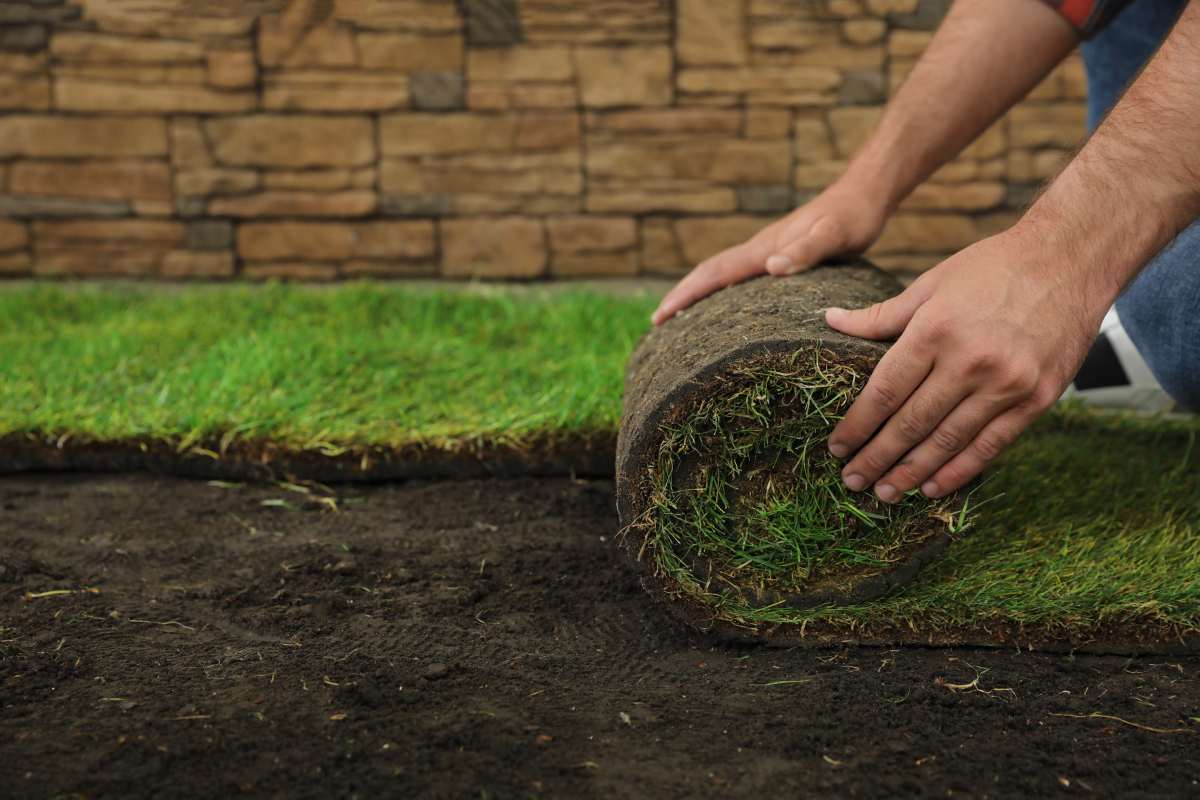
With your soil perfectly prepared, it’s time to lay. Follow these techniques to ensure tight, clean coverage and fast establishment.
As soon as the last roll is laid, begin watering. This is non-negotiable. Turf that dries out in the first 24 hours may not recover. Water deeply enough that moisture penetrates right through the turf into the soil beneath — you can check by lifting a corner of a roll to see how far the water has reached.
For the first two weeks, water daily (or twice daily in hot, dry weather) to keep the soil consistently moist. The goal is to keep the turf from drying out while the roots establish. You’ll know the roots are taking hold when you gently tug a corner of turf and feel resistance. Once established — usually after two to three weeks — you can begin reducing watering frequency and increase the amount per session to encourage deeper rooting.
Note: New lawns in NSW are generally exempt from water restrictions. Check with your local council for current rules, or speak to the A View Turf team for guidance.
Resist the urge to mow too early. Wait until the turf has rooted firmly — typically two to three weeks after laying. Your first mow should be set high, removing no more than one-third of the blade length at a time. Cutting too low too soon stresses the lawn and sets back establishment.
Once your lawn is established, maintain it with a regular care routine:
A strong lawn is naturally more resistant to pests.
Key practices:
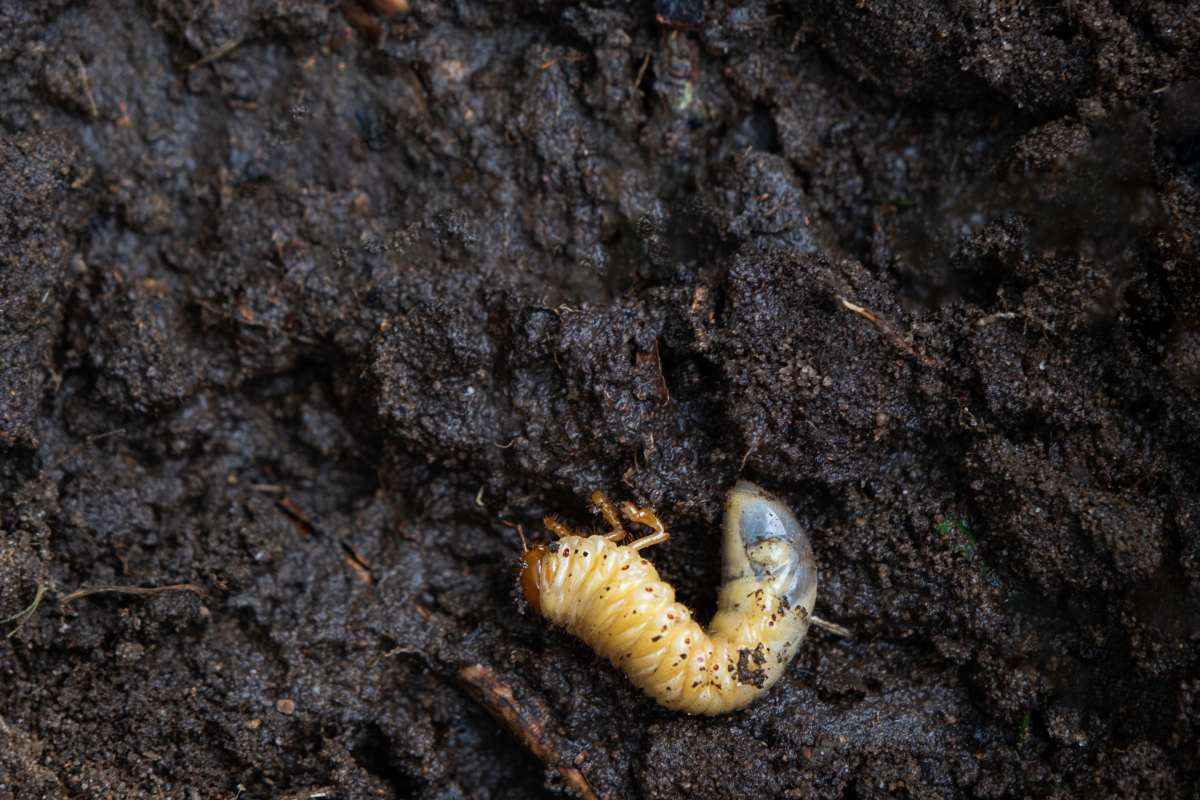
Healthy grass can tolerate minor grub activity without showing visible damage.
Get one of our team members to contact you and discuss your options!
Even with the best intentions, DIY lawn projects can go wrong. Watch out for these common errors:
Laying turf isn’t difficult, but success depends on careful preparation and proper aftercare. By taking the time to prepare your soil, level the surface, install the turf correctly, and maintain a consistent watering schedule, you’ll dramatically improve your chances of achieving a healthy, long-lasting lawn.
At A View Turf, we supply premium-quality turf and provide expert advice to help homeowners achieve outstanding results. Whether you’re tackling a small backyard project or a complete landscape transformation, our team can help you choose the ideal turf variety and provide guidance every step of the way.
Contact A View Turf today to discuss your project and get your new lawn off to the best possible start.
Most turf varieties will begin rooting within 7–14 days under the right conditions. You can test this by gently tugging a corner of a roll — if it resists, the roots are taking hold. Full establishment, where the lawn can handle normal foot traffic and regular mowing, typically takes 3–6 weeks depending on the time of year, variety, and how consistently you water. Warmer months speed up the process; cooler months slow it down.
Yes, you can lay turf year-round in Sydney — and winter is actually a popular time for installation because the cooler temperatures reduce water stress on newly laid rolls. The trade-off is that establishment takes longer in winter as grass growth slows down. Varieties like Matilda Buffalo and Sir Walter handle the cooler months particularly well and will still root successfully with good soil prep and regular watering.
Measure the length and width of each section of your lawn and multiply them to get square metres. Add the totals together for irregular-shaped yards. Always add 5–10% extra for cutting waste around edges, curves, and garden beds. If you’re not confident with the maths, use A View Turf’s online turf calculator at aviewturf.com.au/how-much-turf-do-i-need, or give us a call and we’ll help you work it out.
Spring and early autumn are the ideal windows for laying turf in Sydney. Temperatures are mild, soil moisture is more consistent, and turf roots quickly without the extremes of summer heat or winter cold. That said, turf can be laid year-round in Sydney’s climate. If laying in summer, be prepared to water more frequently — at least once or twice daily in the first two weeks — to prevent the turf from drying out before it roots.
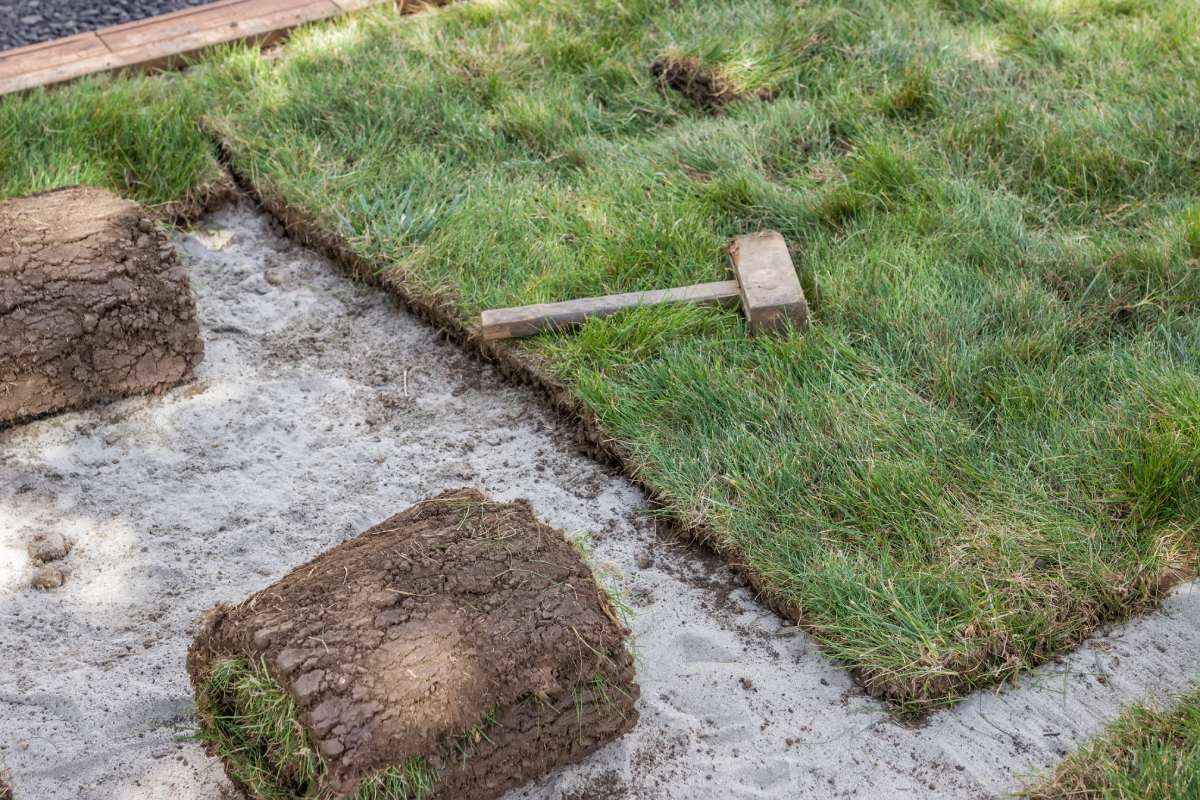
Yes — rolling the lawn after laying is strongly recommended. A lawn roller presses the underside of the turf into firm contact with the soil, eliminating air pockets that would otherwise cause dry spots and patchy establishment. You can hire a water-filled roller from most equipment hire shops. One pass over the entire area immediately after laying (and before watering) is all it takes.
Laying turf directly over existing grass is not recommended. The old grass creates a barrier between the new turf’s roots and the soil, preventing proper establishment and leading to an uneven, spongy surface. Always remove existing vegetation completely, till the soil, and level the surface before laying. It might feel like extra work upfront, but it’s the only way to guarantee a lawn that knits together properly and lasts for years.
At A View Turf, we supply premium, A-grade turf cut fresh to order from our Hawkesbury farm — delivered next day to Sydney and NSW. Every purchase comes with a maintenance booklet covering everything from watering schedules to your first mow, and our team is always on hand to answer your questions.
Whether you want to do it yourself or prefer to leave it to our professional installation team, we’re here to help you get the best possible result. Get in touch today for a free, no-obligation quote.
Call us: 1800 799 222
Email: sale@avt.com.au
Visit: Ebenezer Wharf Road, Wilberforce NSW 2756
A View Turf