
Home » Kikuyu Grass: What are the Pros and Cons?
Get one of our team members to give you a call to discuss your project!
Everyone loves the idea of a lush, emerald-green lawn that stays soft underfoot all summer long.
But maintaining that perfect turf often feels like a losing battle against scorching sun, trampling pets, and constant watering bills. You want a lawn that works for you, not one that demands your entire weekend.
Enter Kikuyu grass (Pennisetum clandestinum). It is famous for being virtually indestructible, but it also has a reputation for being an aggressive invader that can take over your entire garden if left unchecked. Is it the hero your backyard needs, or a maintenance nightmare waiting to happen?
Here is the honest breakdown of Kikuyu grass to help you decide.
The Pros (Why You'll Love It)
The Cons (The Trade-Offs)
Extreme Drought Tolerance: Thrives in heat with minimal water.
Highly Invasive: Spreads aggressively into garden beds.
Rapid Self-Repair: Heals quickly after damage or wear.
High Mowing Frequency: Grows fast, requiring weekly cuts.
Cost-Effective: One of the most affordable turf options.
Poor Shade Tolerance: Will thin out and die without full sun.
Soft & Comfortable: Excellent for kids and pets.
Winter Dormancy: Turns yellow/brown in frost-prone areas.
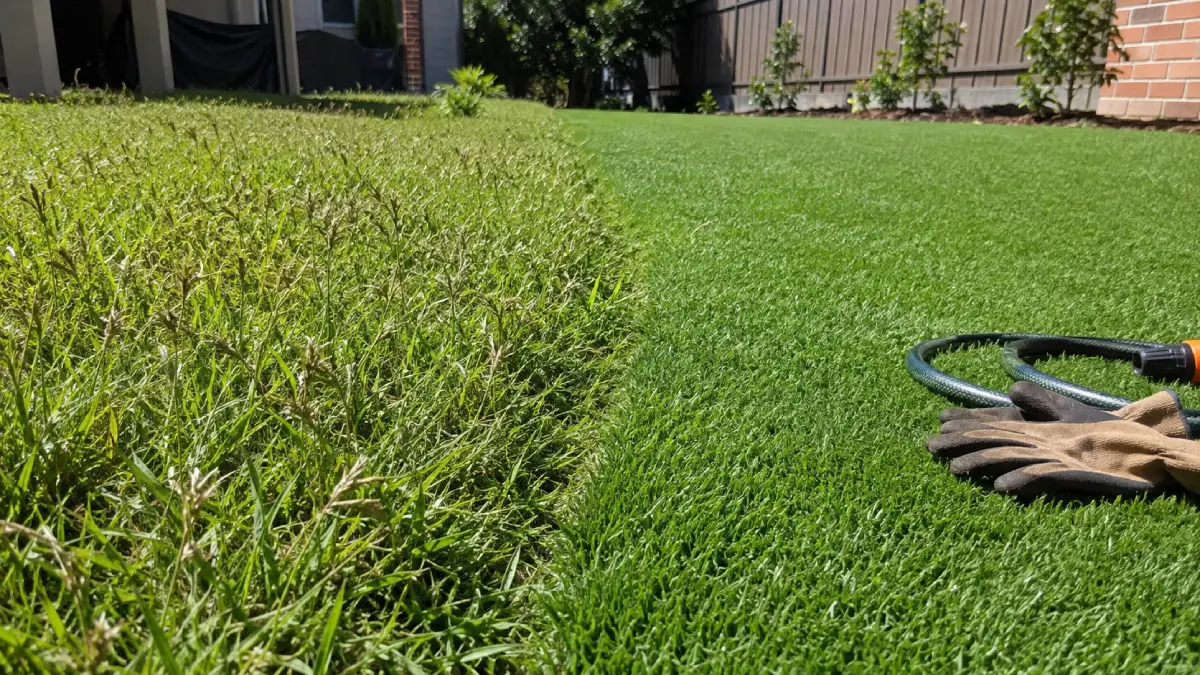
Native to the highlands of East Africa, Kikuyu is a warm-season grass known for its vigorous growth habit. Unlike bunch-type grasses, Kikuyu spreads via a network of thick runners both above ground (stolons) and below ground (rhizomes).
This dual-action root system is what makes it so tough, but it is also what makes it controversial in the landscaping world.
If you have large dogs or active children, this is likely your best option. Because Kikuyu grows via aggressive runners, it self-repairs rapidly.
Kikuyu loves the heat. Its deep root system allows it to seek out moisture well below the surface.
Compared to premium varieties like Sir Walter Buffalo or Zoysia, Kikuyu is exceptionally affordable.
A healthy Kikuyu lawn is so dense that weeds simply cannot compete. The thick mat of stolons chokes out potential invaders before they can take root, reducing your need for chemical herbicides.
Get one of our team members to contact you and discuss your options!
This is the biggest complaint homeowners have. The same vigorous growth that heals patches also drives the grass into your flower beds, under pavers, and into vegetable patches.
Kikuyu is a sun-worshipper. It requires at least 5–6 hours of direct sunlight per day.
During the peak growing season (spring and summer), Kikuyu grows explosively.
As a warm-season grass, Kikuyu goes dormant when temperatures drop. In areas with frost, it will lose its vibrant green color and turn a straw-yellow hue until spring returns.
A: It depends on your needs. Buffalo is better for shade tolerance and is less invasive, making it lower maintenance for garden edges. Kikuyu is cheaper, repairs faster, and is more drought-tolerant but requires more mowing.
A: Physical barriers are essential. Use a concrete mowing strip or metal edging buried at least 150mm (6 inches) deep to stop the underground rhizomes from crossing into garden beds. Regular edging with a whipper snipper is also mandatory.
A: In frost-free zones, it can stay relatively green. However, in cooler climates, it will go dormant and turn yellow. You can improve its winter color by applying a fertilizer high in iron and potassium in late autumn.
A: Yes, unlike many Buffalo varieties which must be laid as turf rolls, Kikuyu can be grown from seed. This makes it an extremely economical choice for covering large acreages or repairing damaged lawns.
Kikuyu is not a “set and forget” lawn. It is a high-performance engine that needs fuel and steering.
The Verdict: If you can manage its aggressive nature, no other grass offers the same level of toughness and recovery for the price.
Are you ready to commit to the weekly mow for a lawn that can survive almost anything?
A View Turf